Traditional Chinese Medicine for North Sydney
Josephine treats a wide variety of issues, including acute muscle pains and also more complex health conditions that may have accompanied a patient for many years.
Your first visit will usually include a consultation similar to that of visiting your GP in a private consultation room, where you can discuss your health concerns and the reason for your visit.
You will also be asked a series of questions in relation to your health to gain a clear picture of your past and present health condition. Diagnostic techniques used by a TCM practitioner will usually include checking your pulse and observation of your tongue.
Phlegm (Tan) in TCM is a far broader concept than the respiratory phlegm of Western medicine. It is a pathological product of disordered fluid metabolism — when the Spleen fails to transform fluids properly, or when the Lungs, Kidneys, or San Jiao fail in their fluid-distributing roles, fluids condense and accumulate as Phlegm. TCM distinguishes between "substantial Phlegm" (visible mucus, sputum, and masses) and "insubstantial Phlegm" (an invisible pathogenic factor causing dizziness, mental confusion, numbness, and nodules).
The classic TCM saying "the Spleen is the source of Phlegm; the Lungs are the storehouse of Phlegm" highlights the central role of Spleen dysfunction in Phlegm production and the Lungs in its visible manifestation. However, Phlegm can lodge anywhere in the body: in the Lungs (causing cough with copious sputum), in the channels (causing numbness and nodules), in the Heart (causing mental confusion, mania, or loss of consciousness), in the throat (causing goitre), or under the skin (causing lipomas).
Phlegm can combine with other pathogens — Phlegm-Heat produces yellow, sticky sputum and agitation; Phlegm-Cold produces white, watery sputum and lethargy; Phlegm-Dampness creates a heavy, foggy feeling with poor appetite and nausea. The tongue coating in Phlegm patterns is characteristically thick and greasy. Treatment focuses on resolving Phlegm with herbs like Ban Xia (Pinellia ternata) and Chen Pi (tangerine peel), while simultaneously strengthening the Spleen to address the root cause of Phlegm production. The formula Er Chen Tang (Two Aged Decoction) is the base prescription for Phlegm conditions.
TCM Phlegm extends beyond respiratory mucus to include any pathological fluid accumulation. Substantial Phlegm is visible (sputum, mucus). Insubstantial Phlegm is invisible but causes dizziness, foggy thinking, numbness, nodules, and masses. Both arise from disordered fluid metabolism, primarily due to Spleen dysfunction.
Phlegm treatment addresses both the manifestation (resolving existing Phlegm with herbs like Ban Xia and Chen Pi) and the root cause (strengthening the Spleen's fluid-transforming function). Er Chen Tang is the foundational formula. Dietary changes — reducing dairy, greasy, and sweet foods — support treatment by reducing Phlegm-generating burden on the Spleen.
Josephine Zhuo (TCM) is an AHPRA registered health practitioner — acupuncturist and herbalist.
Book OnlineOr call to make a booking
Root-cause diagnosis for each patient's body constitution and health condition.
All seasons of women's health, from menarche through pregnancy to menopause.
AHPRA registered. Individualised care through acupuncture and herbal medicine.
Acupuncture, cupping, moxa and herbal medicine used in combination.
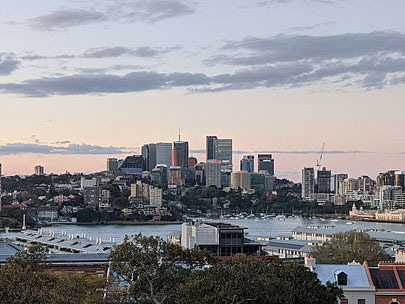
North Sydney is a suburb and major commercial district on the Lower North Shore of Sydney, Australia. North Sydney is located 3 kilometres north of the Sydney central business district and is the administrative centre for the local government area of North Sydney Council.
Aborigines on the southern side of Port Jackson (Sydney Harbour) called the north side warung which meant the other side, while those on the northern side used the same name to describe the southern side.
The first name used by European settlers was Hunterhill, named after a property owned by Thomas Muir of Huntershill (1765–1799), a Scottish political reformer. He purchased land in 1794 near the location where the north pylon of the Sydney Harbour Bridge is now located, and built a house which he named after his childhood home. This area north to Gore Hill became known as St Leonards. The township of St Leonards was laid out in 1836 in what is now North Sydney, bounded by what is now Miller, Walker, Lavender and Berry Streets. By 1846 there were 106 houses here and by 1859, the commercial centre had extended from Milsons Point to Miller Street. A bus service operated by Jeremiah Wall ran between Milsons Point and North Sydney Shops, and North Sydney thus developed its own identity.
The North Sydney municipality was incorporated in 1890 and after naming disputes, North Sydney was settled upon. The post office which opened in 1854 as St Leonards was changed to North Sydney in 1890. The first public school which opened in 1874 as St Leonards was renamed North Sydney in 1910.
All information on this website is provided as general health information. While we have exercised due care in ensuring the accuracy of the material contained on this website, the information on the site is made available on the basis it does not constitute providing professional medical advice on a particular matter. This website is not a substitute for independent and separate professional medical advice. Nothing contained in this site is intended to be used for specific diagnosis, treatment, cure or prevention of any symptoms, diseases or conditions, nor should it be a substitute for your own health professional's advice. We do not accept any liability for any injury, loss or damage incurred by use of or reliance on the information provided on this website.
Chinese Medicine Doctor near North Sydney, Acupuncture for insomnia near North Sydney, Acupuncture for pain relief near North Sydney, Acupuncture for anxiety near North Sydney, Herbalist near North Sydney, Maintaining health near North Sydney, Moxibustion near North Sydney, Cupping near North Sydney, Acupuncture for weight loss near North Sydney, Cosmetic acupuncture near North Sydney.
Book your appointment with Josephine Zhuo today